The return of the DVD
Streaming is convenient. But the DVD is embodied.
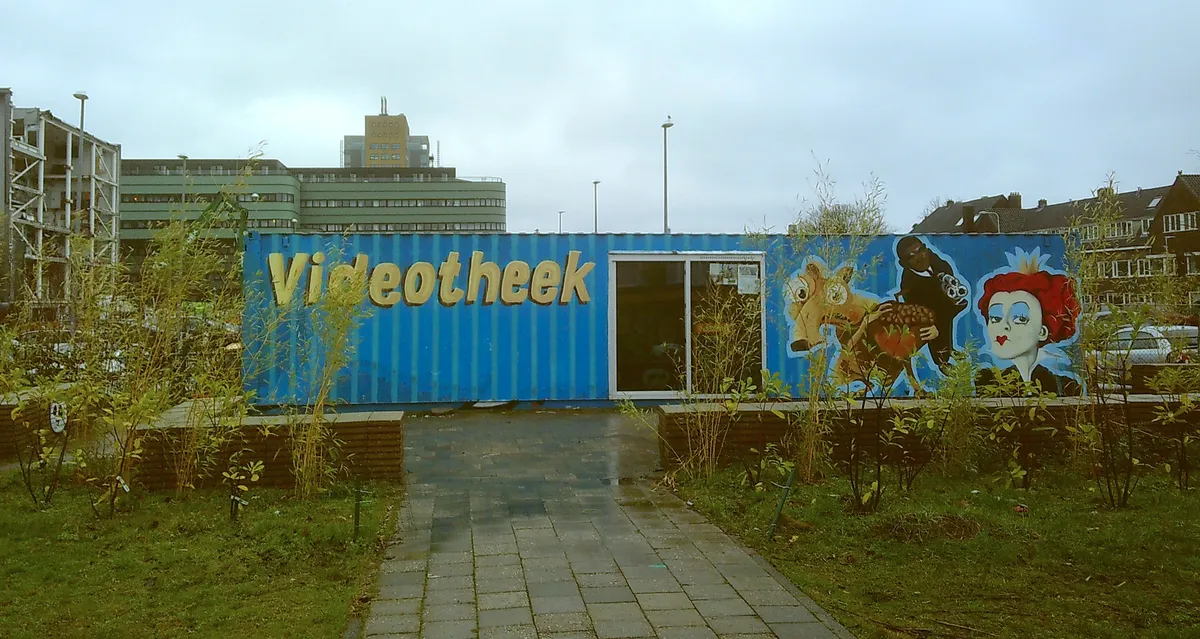 The Videotheek, Utrecht
Near a bank headquarters in central Utrecht, a seemingly abandoned shipping container stands in the middle of a small field. When I visited on a recent Thursday night, signs of life slowly revealed themselves: a dim light, a few parked bicycles, and, inside, a small group of people crammed into the long, narrow room. Soon the creator, Utrecht-based artist Pet van de Luijtgaarden, walked in and explained why, in early 2026, he opened the pop-up “Videotheek”, a free lending library for DVDs open one day a week.
“It’s just fun,” Pet says, refusing to over-intellectualize. “People just like it. It’s cozy, you can just come here and watch something. I like it too—the whole ‘physical’ thing, you know?” In addition to lending out DVDs and even DVD players (few people have them anymore), the container hosts small-scale weekly film screenings. (A similar project had already launched in Amsterdam, with its own Substack.1)
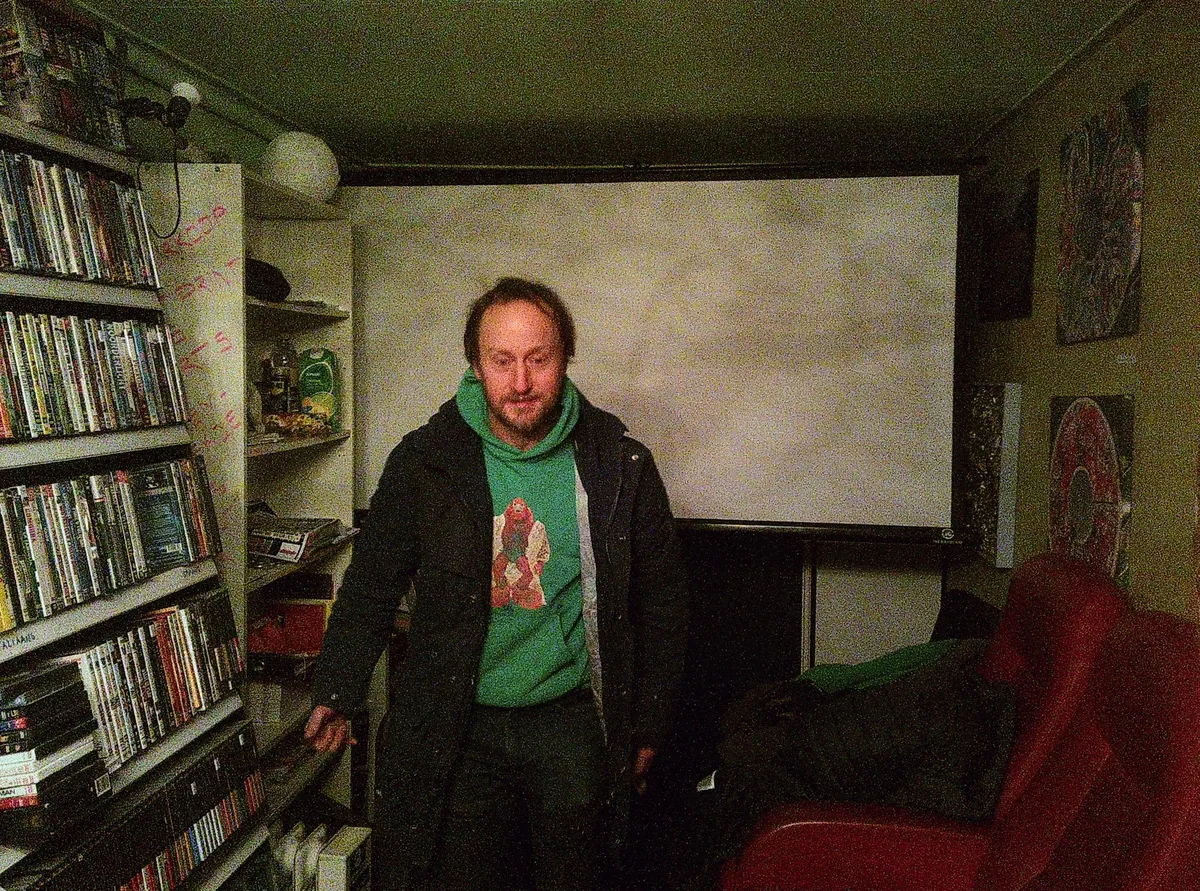 Pet sets up the projector screen for the Videotheek's evening film screening.
A minor reemergence of the DVD might seem curious. Unlike the easily-romanticized vinyl or analog camera, DVDs are a profoundly digital medium—operating through a binary computer code of ones and zeros—and their rise occurred simultaneously with the proliferation of the internet. Unlike some analog media, nobody can argue that the DVD’s standard definition offers high-fidelity images.
At the same time, DVDs reflect an earlier incarnation of the digital era, an interregnum that more and more people are starting to miss. For most of the 2000s, digital technologies like cellphones, televisions, video players, music players, and cameras were separate devices with distinct functions and locations. Computers tended to stand on one desk location in the house, and once you left that location you were offline. In this way, the digital world was more spatially heterogenous and tactile.
However, since the 2010s, work, entertainment, and communication have increasingly converged into an ever-smaller coterie of devices that follow the user everywhere they go. If you want to send a friend a song, you may send a Spotify link through WhatsApp, stacking two big-tech platforms atop one another. Twenty years ago, you might have just given them a CD. Still digital, but tangible. Similarly, the defining experience of home movie watching in this early digital era was an exploratory visit to the DVD store; in the streaming era, the defining experience is choice paralysis in front of a Netflix interface. Take Sally Rooney’s picture of modern domestic bliss in Beautiful World Where Are You?: a couple “look through the trailers on various streaming services for an hour until one or both of us falls asleep and then we go to bed”.2
Facing this choice overwhelm, the limits of the DVD become attractive. Once you’ve brought home your DVD, “you have to deal with it,” Pet explains. “You have to make conscious choices. And the young people [who come here] love this, being able to limit themselves.”
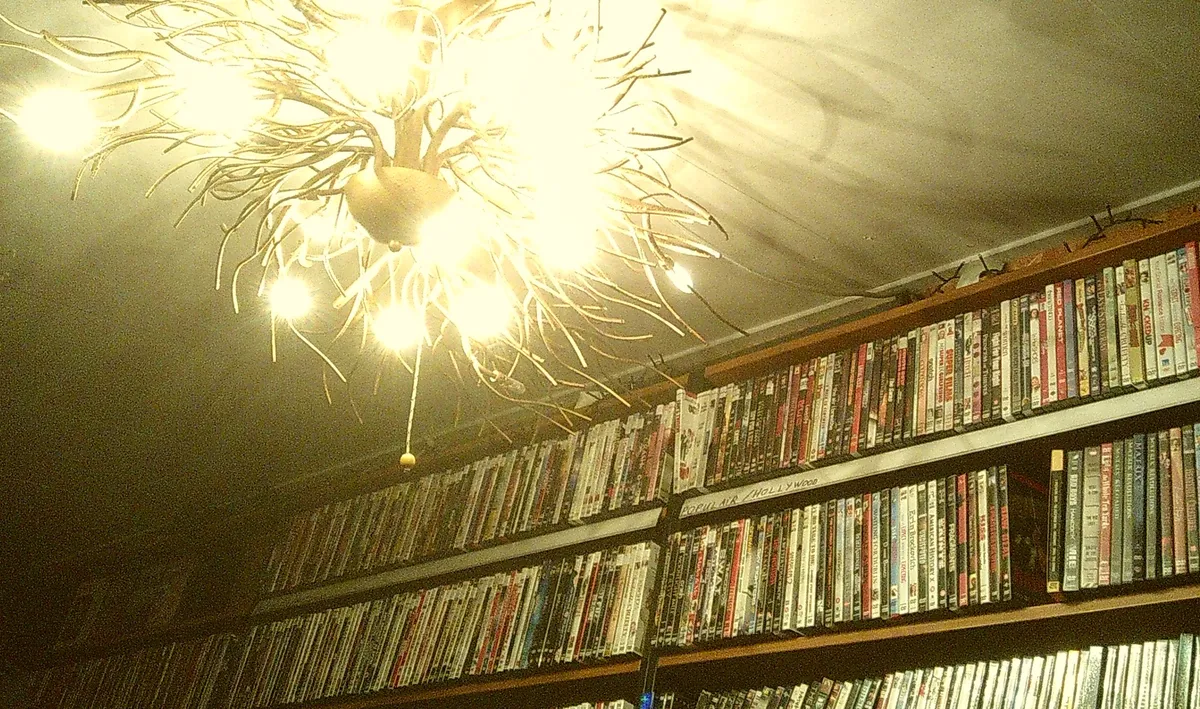 Inside the Videotheek
The inconvenience and commitment enrich the experience, making it all the more embodied. There is also an interpersonal, social layer: when you borrow a DVD, you have a brief interaction with the minder of the shop. Even if this is purely transactional, this human interaction contains depths of information that no streaming interface could communicate.
We’ve written before about the empowering benefits of non-ubiquitous media, citing Harold Innis.3 But the DVD has particular experiential benefits that can also be theorized from a more contemporary human-computer interaction point of view.
“How Bodies Matter”
In an influential 2008 paper, “How Bodies Matter”, three human-computer interaction experts (Klemmer, Hartmann, and Takayama) argue that the flattening of all information processing into a computer terminal may be bad for both productivity and individual well-being.4 Citing research across disciplines, they call for “richer” computer interfaces that incorporate the physical world. While they primarily discuss professional applications of computers, two themes they identify in particular help explain the lasting appeal of DVDs.
One beneficial design element they identify is “risk”: Essentially, they argue that the “undo” button, while useful, keeps computer interactions superficial. But when we make the user commit, and thus take risks, we create “opportunities for more trusting, committed, responsible, and focused interactions”, as well as deeper engagement.5 Once you get a DVD, you’ve made a soft commitment to watch the movie; once you start playing the DVD, it’s inconvenient to stop it and start another. (Compare this with one of the defining elements of modern streaming: the ability to stop watching at any point and switch to something more exciting.) If we believe Klemmer, Hartmann, and Takayama, DVDs can create richer film viewing experiences by increasing commitment.
Another theme the authors identify is what they call “thick practice”, which refers to the complexity and richness of any human practice that technologists are trying to digitalize. Netflix digitalizes not only the film itself, but also the act of buying and choosing it. This increases convenience, but inadvertently destroys many elements of the filmviewing experience. As the authors argue: “System designers have often ‘paved paradise and put up a parking lot’—the goals were noble, but important invisible aspects of work practice were denied by the new technology”. One solution, the authors suggest, is “designing interactions that are the real world instead of ones that simulate or replicate it”.6
Pet’s Videotheek is a perfect example of such an alternative interface: as opposed to a two-dimensional streaming platform, the Videotheek’s interface is, quite literally, “the real world”. It is also inherently social, facilitating the exchange of tips and the formation of transient person-to-person connections. In this case, the analog vs. digital distinction becomes less applicable; flat vs. embodied may be an apter dichotomy.
Klemmer, Hartmann, and Takayama’s article concludes that “because there is so much benefit in the physical world, we should take great care before unreflectively replacing it”.7 At a time of great outrage about content distribution algorithms and who controls them, it’s worth noting that the solution need not be a better algorithm. You can also produce and distribute digital information non-algorithmically, via the physical world. It’s not always the right answer, but it’s possible. It happens every day. Or at least every Thursday.
Text and photos by: Eduard
Footnotes & references:
Rooney, Sally. Beautiful World, Where Are You. London, Faber & Faber, 2021, p. 336.↩
Klemmer, Scott R., et al. “How Bodies Matter.” Proceedings of the 6th ACM Conference on Designing Interactive Systems - DIS ’06, 2006, dl.acm.org/citation.cfm?id=1142429, https://doi.org/10.1145/1142405.1142429.↩
"How Bodies Matter". p. 145↩
"How Bodies Matter", p. 146↩
"How Bodies Matter", p. 147↩